The Cold Hard Truth: What Are Ice Dams and Why Do They Happen?
The Cold Hard Truth: What Are Ice Dams and Why Do They Happen?
Living in the Midwest, we often see roofs lined with sparkling icicles. While they might look picturesque in a holiday movie, for a homeowner, they are often a warning sign of a destructive problem: Ice Dams.
At Northwind Exteriors (and our specialized division, Ice Dam Liquidators of Chicago), we see the damage these formations cause every winter. But what exactly are they, and why do they form?
What is an Ice Dam?
An ice dam is a ridge of ice that forms at the edge of a roof and prevents melting snow (water) from draining off the roof. The water that backs up behind the dam can leak into a home and cause damage to walls, ceilings, insulation, and other areas.
The Science: How Do They Form?
As illustrated in the diagram above, ice dams are essentially caused by a temperature difference between the top of your roof and the bottom (eaves). Here is the step-by-step process:
Heat Escapes: If a home has insufficient insulation or poor ventilation, warmth from the living space escapes into the attic.
Snow Melts: This trapped attic heat warms the roof deck, melting the snow sitting on top of it—even when the temperature outside is freezing.
Water Runs Down: The melted water runs down the slope of the roof under the blanket of snow.
Refreezing at the Eaves: When that water reaches the roof's edge (the eaves), it hits a cold spot. Because the eaves overhang the house, they aren't warmed by the attic heat. The water freezes instantly.
The Dam Builds: As this cycle continues, layers of ice buildup, forming a "dam." Eventually, water pools behind this ice wall, forcing its way under your shingles and into your home.
Sometimes, Mother Nature Just Wins
While insulation and ventilation are the primary culprits, it is important to be realistic: Sometimes, there is nothing you can do to prevent an ice dam.
Certain weather conditions create the "perfect storm" for ice dams, regardless of how well-insulated your home is.
Heavy Snowfall: Thick snow acts as an insulator, trapping heat against the roof.
Freeze/Thaw Cycles: Rapid fluctuations in temperature (sunny days followed by freezing nights) naturally create melting and refreezing.
Extreme Cold: When temperatures drop significantly, even minimal heat loss can result in immediate freezing at the eaves.
In these cases, preventative construction measures might not be enough. If the weather dictates it, the ice will come.
The Solution: Steam Removal
When prevention fails and a dam has formed, chipping away at the ice with hammers, picks, or shovels is dangerous—it’s the easiest way to destroy your shingles and void your roof warranty.
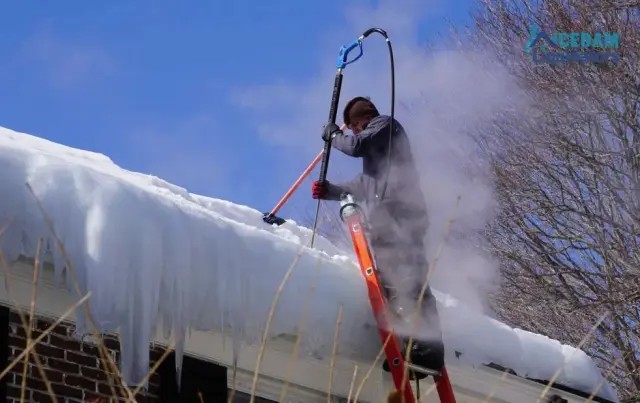
The only safe, effective method for removal is Steam.
As seen in the video above, our team uses specialized steamers that run at low pressure but high temperature. This allows us to cut through the ice like a hot knife through butter, safely removing the dam without damaging the roofing materials underneath.
Need Help?
If you spot an ice dam forming or notice water leaking into your home, don't wait for the ceiling to sag.
Contact Northwind Exteriors / Ice Dam Liquidators of Chicago Call us at: 773-998-4000
Let us help you stop the damage before it starts.